M.C. Mehta


Land Mark Cases


TAJ MAHAL CASE:

Taj Mahal, one of the wonders of the world and the pride of India was facing serious threat from pollution caused by Mathura Refinery, iron foundries, glass and other chemical industries. As a result of very high toxic emissions from these industries, the Taj Mahal and 255 other historic monuments within the Taj trapezium were facing serious threat because of acid rain. The Petition was filed in the year 1984. The Supreme Court of India delivered a historic Judgement in December 1996. The apex Court gave various directions including banning the use of coal and coke and directing the industries to switch over to Compressed Natural Gas (CNG).


GANGES POLLUTION CASE:

Three landmark judgments and a number of Orders against polluting industries numbering more than fifty thousand in the Ganga basin passed from time to time. A substantial success has been achieved by way of creating awareness and controlling pollution in the river Ganges.
In this case, apart from industries, more than 250 towns and cities have been ordered to put sewage treatment plants. Six hundred tanneries operating in highly congested residential area of Kolkata have been shifted out of the City and relocated in a planned Leather Complex in the State of West Bengal. A large number of industries were closed down by the Court and were allowed to reopen only after these industries set up effluent treatment plants and controlled pollution. As a result of these directions millions of people have been saved from the effects of air and water pollution in Ganga basin covering 8 states in India.


RELOCATION OF 90000 POLLUTING INDUSTRIES OPERATING IN DELHI:

A large number of hazardous industries had become a serious health hazard and posed danger to the life and health to a large population living in Delhi. Despite their ban, these industries continued to operate in Delhi in violation of the Master Plan and Environmental laws. Seeing the defiant attitude of the industries a petition was filed in the Supreme Court. In this case, in 1996 the apex Court ordered the closure of major polluting and hazardous industries from Delhi and their relocation in the neighbouring states. More than 1300 major polluting and hazardous industries were closed down in Delhi.

Industries numbering more than 90,000 operating in nonconforming areas in Delhi had also been asked to close down their operations and shift them to conforming areas. Hundreds of industries operating in conformity with the master plan in 28 industrial areas were ordered to set up Common Effluent Treatment Plants at 15 places to control pollution.


VEHICULAR POLLUTION CASE:

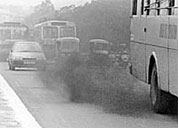
Against vehicular pollution in India the Supreme Court delivered a landmark judgment in 1992. A retired Judge of the Supreme Court was appointed along with three members to recommend measures for the nationwide control of vehicular pollution. Orders for providing Lead free petrol in the country and for the use of natural gas and other mode of fuels for use in the vehicles in India have been passed and carried out. Lead-free petrol had been introduced in the four metropolitan cities from April 1995; all new cars registered from April 1995 onwards have been fitted with catalytic convertors; COG outlets have been set up to provide CNG as a clean fuel in Delhi and other cities in India apart from Euro 2 norms. As a result of this case, Delhi has become the first city in the world to have complete public transportation running on CNG.


DELHI SEWAGE TREATMENT PLANT CASE:

About 10 million people living in Delhi and millions of people living along the banks of river Yamuna were exposed to health hazards from water contamination due to total absence of sewage treatment plant in many areas of Delhi. A time bound programme was given by the Supreme Court to the Delhi Municipal Corporation for setting up of treatment plant in 16 different localities in this case.


CHILD LABOUR CASE:

By raising issue of exploitation of child labour in Sivakasi (Tamil Nadu) match and fireworks factories, more than one million children working in hazardous industries in Tamil Nadu and other States in India were benefited. Thus ambit of the case was widened to include child labour in the whole country. The Supreme Court directed all the States to identify children forced into labour and come out with schemes for their rehabilitation. Child labour in hazardous industries has been banned. In another case, 194 children illegally detained in different jails in Orissa were released.


AQUACULTURE CASE:

Big industrial houses and multinationals had started commercial prawn farming in a big way in the coastal states of Orissa, Andhra Pradesh and Tamil Nadu in a totally unplanned, unscientific and unscrupulous manner, and in the process, destroyed large areas of rich fertile lands; caused salinity in the ground water, uprooted small farmers and destroyed the livelihood of lakhs of fishermen. A writ petition was filed in the Supreme Court in the name of S. Jagannathan, a Gandhian working for the weaker sections in the coastal area of Tamil Nadu, praying for the protection of coastal ecology and lives and livelihood of thousands of small farmers and fishermen. The Supreme Court of India banned intensive prawn culture within 500 mtrs of High Tide Line and within 1000 mtrs of Chilka lake and Pullicat lake. An Authority under the Chairmanship of a retired Supreme Court Judge was ordered to to be constituted by the Central Govt. under Environment Protection Act 1986 to implement the principles of 'Precautionary Principle' and the 'Polluter Pays Principle' to assess the loss to ecology and recover the cost of eco-restoration and amount of compensation from the polluters.


ENVIRONMENTAL AWARENESS AND EDUCATION CASE:

Succeeded in getting orders from the Court that all over the country the cinema theaters will exhibit two slides free of cost on environment in each show failing which their licenses will be cancelled, a minimum 5 to 7 minutes will be given by the television network in the country to televise programmes on environment apart from giving a regular weekly programme on environment. Environment has become a compulsory subject up to 12th standard from academic session 1992 and University Grants Commission will also introduce this subject in higher classes in different Universities.

DELHI RIDGE CASE:

To save the Delhi ridge from destruction an order from the Supreme Court was obtained directing NCT of Delhi to declare it as 'Reserved Forest'.


DUST POLLUTION CASE:

In a historic case, 212 stone crushers were shifted out of Delhi to a 'Crushing Zone' set up in Haryana by an order of the Supreme Court on May 15th, 1992. Emission of more than 1500 tons of dust emitted daily in the atmosphere has been eliminated.


KAMAL NATH CASE:

In the State of Himachal Pradesh, Span motel, owned by the family members of Shri Kamal Nath, Minister for Environment and Forests, Govt. of India diverted the Course of river Beas to beautify the motel and also encroached upon some forest land. The apex court ordered the management of the Span motel to hand over forest land to the Govt. of Himachal Pradesh and remove all sorts of encroachments.

The Court delivered a land mark judgment and established principle of exemplary damages for the first time in India. The Court said that polluter must pay to reverse the damage caused by his act and imposed a fine of Rs Ten Lakhs (Rs 10,00,000) on the Span motel as exemplary damages. The Supreme Court of India recognized Polluter Pays Principle and Public Trust Doctrine.


COASTAL AREAS CASE:

Despite Coastal Zone Regulation Notification of February 1991, none of the coastal states had formulated coastal zone management plan, with the result that haphazard construction and industrial activity was being permitted anywhere in the coast leading to large scale damage to coastal ecology and loss of livelihood to lakhs of fishermen and other indigenous communities dependent on marine resources. A writ petition was filed on behalf of Indian Council for Enviro- Legal Action (ICELA) and the Supreme Court delivered a landmark Judgement banning industrial/ construction activity within 500 mtrs of the High Tide Line and set a time limit for the coastal states to formulate coastal management plans.


ANTOP HILL CASE :

In the heart of Mumbai at Antop Hill, a large-scale chemicals storage center for hazardous chemicals was being proposed to be set up flouting all environmental considerations and safety of more than 1.5 million people living in and around that area. A case was filed in the Supreme Court and timely action stopped the authorities/industries from locating such godowns.


GAMMA CHAMBER CASE:

Due to filing of case against radiation from a Gamma Chamber, students and teachers in Jawaharlal Nehru University (JNU), Delhi were saved from hazardous radiation.


GROUND WATER POLLUTION CASE:

In Rajasthan at Bichhri, 5 small chemical industries, owned by a single owner, were operating without effluent treatment plant. Toxic effluents from the industries entered the ground water and wells of 14 villages became affected. After six years of battle in the Court, the Supreme Court delivered a Judgement in March 1996 directing the closure of the factories and attached the property of the polluter and directed the Department of Environment and Forests Govt. of India to recover the cost of eco- restoration from the industries held responsible for causing damage to the environment.


GROUND WATER DEPLETION CASE:

Unsystematic and unscientific tapping of groundwater all over the country had led to alarming fall in the levels of groundwater and data provided by Ground Water Board showed a near crisis situation developing in many areas of the country. Further, the contamination of ground water due to indiscriminate discharge of toxic effluents on the ground and surface water bodies was going on in an unchecked and uncontrolled manner and pollution control Boards were not in a position to either assess the extent of ground water contamination or identify the sources of contamination. The ground water board had no teeth or legal authority to take action against offending parties. This matter was taken up in the Supreme Court and vide an historic Judgement, Ground Water Board had been made into an AUTHORITY invested with legal powers under the Environment Protection Act 1986 to issue licenses and take action against polluters even to the extent of closing down of offending industries.


ANDHRA PRADESH POLLUTING INDUSTRIES CASE:


A case on behalf of villagers living in 14 villages adjacent to Naka Vagu Stream, which was once a fresh water stream, but had turned into a huge drain carrying industrial effluents from about 250 industries without any primary treatment plants. Under the Supreme Court's Order, compensation of more than 20 million was paid to the farmers who had lost their crops and cattle due to air and water pollution. The authorities, under the Order of the Court, are monitoring the setting up of pollution control devices by the polluting industries.

Number of other significant cases have been taken up and trend setting Judgments have been passed. A number of other cases against pollution of air, water and soil from existing industries, deforestation and environmental degradation are still pending.


Awards    |    Positions Held in the past  |    Publications   |    Appreciation shown by the Supreme Court of India   |   

Activities, Campaigns and Movements   |    Contribution To Environmental Jurisprudence    |     

Articles on M C Mehta in National/ International Newspapers/ Magazines    |    Landmark Cases

 
© 2003 M. C. Mehta Environmental Foundation . All rights reserved.